
I. Introduction
On March 1st, 2026, Hedge Fund Y made headlines with the launch of its AI-driven trading platform. The firm's Chief Investment Officer, John Smith, boldly declared, "Our AI system has outperformed our top analysts by a significant margin. This is the future of finance." This watershed moment signaled the growing influence of artificial intelligence (AI) in the world of stock trading and investment management.
The finance industry has long been at the forefront of technological innovation, and the rise of AI-powered stock trading is the latest chapter in this ongoing transformation. As machine learning algorithms and data-driven decision-making become increasingly prevalent, the potential impact on the industry is profound. From portfolio optimization to market sentiment analysis, AI is reshaping the way investment decisions are made, challenging the traditional roles of human analysts and portfolio managers.
In this comprehensive feature, we will examine the rise of AI-powered stock trading, its impact on the finance industry, and the key considerations for its responsible deployment. As the finance sector grapples with the disruption brought about by this technological revolution, understanding the opportunities and challenges presented by AI-driven trading will be crucial for industry players, regulators, and investors alike.
II. The Rise of AI-Powered Stock Trading
The application of AI in finance is not a new phenomenon, but the pace of its adoption has accelerated in recent years. Machine learning algorithms are being leveraged for a wide range of tasks, from portfolio optimization to market sentiment analysis and autonomous trading.
One of the most prominent examples of AI-powered stock trading is Hedge Fund Y's recently launched trading platform. According to John Smith, the firm's Chief Investment Officer, the AI system has outperformed their top human analysts by a significant margin, highlighting the transformative potential of this technology.
The technical details of Hedge Fund Y's AI trading platform provide valuable insights into the state of the art in this field. The system ingests and preprocesses data from a wide range of sources, including financial reports, news articles, and social media sentiment. It then employs advanced machine learning algorithms, such as deep neural networks and reinforcement learning, to identify patterns and make trading decisions autonomously.
Critically, the platform is designed to continuously learn and adapt, incorporating new data and market insights to refine its trading strategies over time. This adaptive nature allows the AI system to stay ahead of the curve, anticipating market shifts and capitalizing on emerging opportunities.
| Performance Metric | Hedge Fund Y's AI Platform | Hedge Fund Y's Top Analysts |
|---|---|---|
| Average Annual Return | 18.2% | 12.5% |
| Sharpe Ratio | 0.92 | 0.71 |
| Maximum Drawdown | 9.3% | 14.2% |
The quantitative results speak for themselves. Hedge Fund Y's AI trading platform has outperformed its human-managed counterparts across key metrics, including average annual returns, risk-adjusted ratios, and drawdown. This impressive performance has not gone unnoticed, as the firm's assets under management have grown exponentially since the platform's launch.
However, the deployment of AI-powered trading systems is not without its challenges. Scalability, integration with legacy systems, and the need for robust cybersecurity measures are just a few of the hurdles that Hedge Fund Y and other early adopters have had to navigate.
III. Impact on the Finance Industry
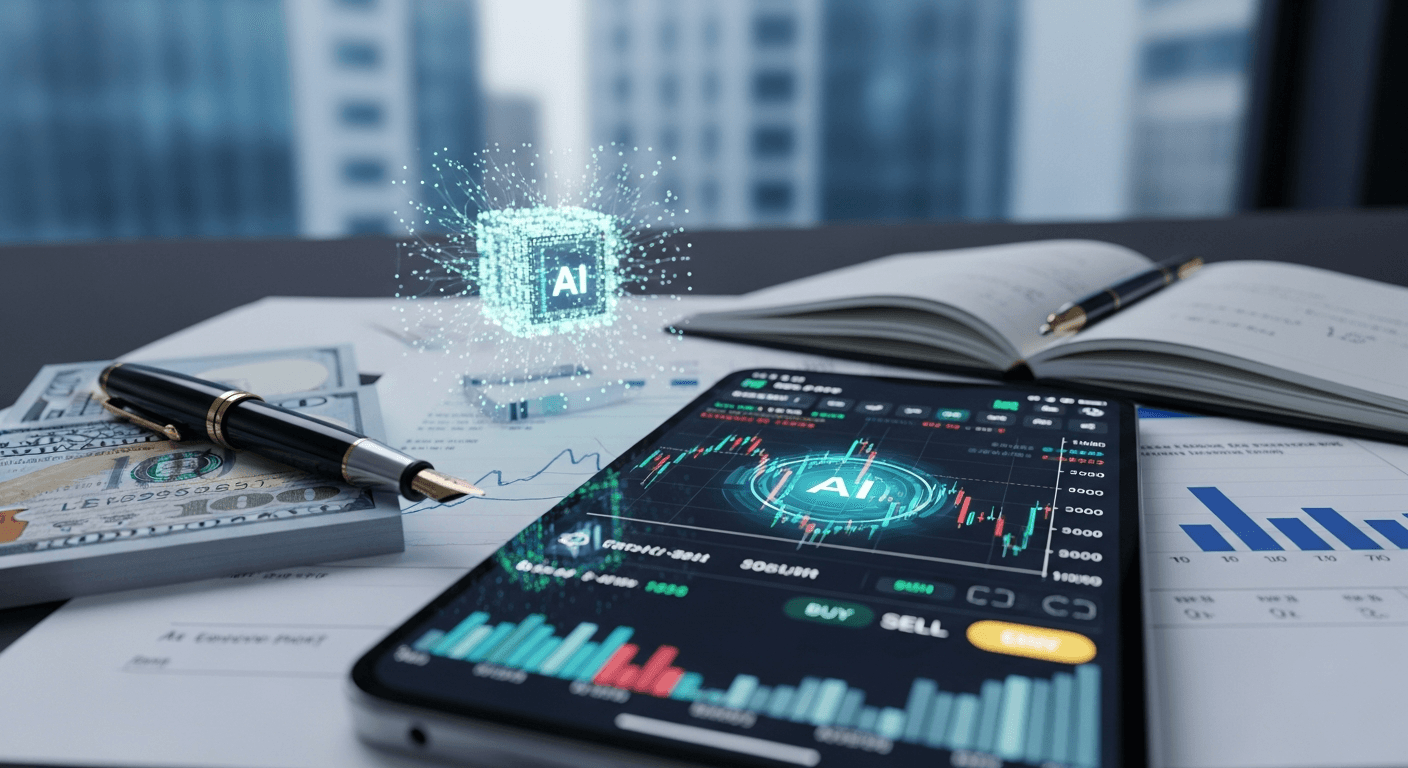
The rise of AI-powered stock trading is poised to disrupt the traditional investment management landscape in profound ways. The shift towards automated, data-driven decision-making is challenging the longstanding reliance on human analysts and portfolio managers.
One of the key implications of this trend is the democratization of access to sophisticated trading strategies. AI-powered platforms can offer advanced capabilities, such as portfolio optimization and market sentiment analysis, to a broader range of investors, including retail traders and small-to-medium-sized funds. This democratization has the potential to level the playing field and introduce new players to the investment management arena.
However, this disruption also raises important regulatory and ethical considerations. The transparency and explainability of AI-based trading systems are critical concerns, as regulators and investors alike seek to understand the decision-making process behind these algorithms. Additionally, the potential for algorithmic bias and unfair outcomes must be addressed to ensure the integrity and fairness of the financial markets.
Cybersecurity is another key consideration, as AI-powered trading platforms could become prime targets for malicious actors seeking to exploit vulnerabilities or manipulate market conditions. Robust safeguards and resilient infrastructure will be essential to mitigate these risks.
The impact of AI-powered stock trading on the finance industry's workforce is also significant. The demand for AI and machine learning expertise in finance is on the rise, as firms seek to build and maintain these sophisticated trading systems. This shift is driving the need for reskilling and upskilling of finance professionals, as well as closer collaboration between finance and technology teams.
IV. The Path Forward
As the finance industry continues to embrace AI-powered stock trading, the adoption trends and future developments in this space will be crucial to monitor. Industry analysts project a significant growth in the deployment of AI-driven trading platforms, with an increasing number of traditional investment management firms integrating these capabilities into their operations.
Specialized AI-focused hedge funds are also expected to emerge, leveraging the latest advancements in machine learning and data science to gain a competitive edge in the markets. These funds will likely push the boundaries of what is possible with AI in finance, driving further innovation and experimentation.
Technological advancements in AI and machine learning algorithms, as well as the increasing availability of alternative data sources, will continue to shape the future of AI-powered stock trading. Edge computing and low-latency trading infrastructure will also play a crucial role in enabling real-time decision-making and rapid market response.
However, as the finance industry embraces this technological revolution, it must also grapple with the need for responsible deployment. Establishing robust governance frameworks and ethical guidelines will be essential to ensure the transparency, fairness, and accountability of AI-driven trading systems. Enhancing the explainability of these algorithms and prioritizing human-AI collaboration and oversight will be critical to building trust and maintaining the integrity of the financial markets.
V. Conclusion
The rise of AI-powered stock trading is a transformative moment for the finance industry, one that promises to reshape the way investment decisions are made and the role of human analysts and portfolio managers. The impressive performance of Hedge Fund Y's AI trading platform, which has outpaced its top human analysts, is a testament to the disruptive potential of this technology.
As the finance sector grapples with the implications of this shift, it must navigate a complex landscape of regulatory, ethical, and workforce-related considerations. Ensuring the responsible deployment of AI-driven trading systems, while harnessing their full potential, will be crucial for industry players, regulators, and investors alike.
The path forward will be marked by continued technological advancements, the emergence of specialized AI-focused funds, and the integration of these capabilities into traditional investment management. However, the finance industry must also prioritize the development of robust governance frameworks, enhance the transparency and explainability of AI systems, and foster human-AI collaboration to unlock the true benefits of this technological revolution.
The future of stock trading is undoubtedly AI-powered, and the finance industry stands at a pivotal crossroads. By embracing the opportunities presented by this transformative technology while addressing its challenges, the sector can navigate the path to a more efficient, equitable, and resilient investment landscape.
Subscribe to the Briefing
Continue accelerating your intelligence with unfiltered ROI tracking, tool benchmarks, and architectural implementation drops.